Translated from: 战争事典2020-09-12 07:00
https://baijiahao.baidu.com/s?id=1677542229785999234&wfr=spider&for=pc
The Wei, Jin, and Northern and Southern Dynasties period was a time of armor fusion and integration. Before this period, Chinese armor primarily consisted of scale armor (zhajia 甲胄), which had not been influenced by foreign armor designs. However, starting in this period, foreign armor styles began to be incorporated, becoming an important part of Chinese armor development history. The most notable example can be found in Cao Zhi’s catalog of armors, which mentions the “ring-locked armor” (huansuo kai), commonly known as chain mail armor.
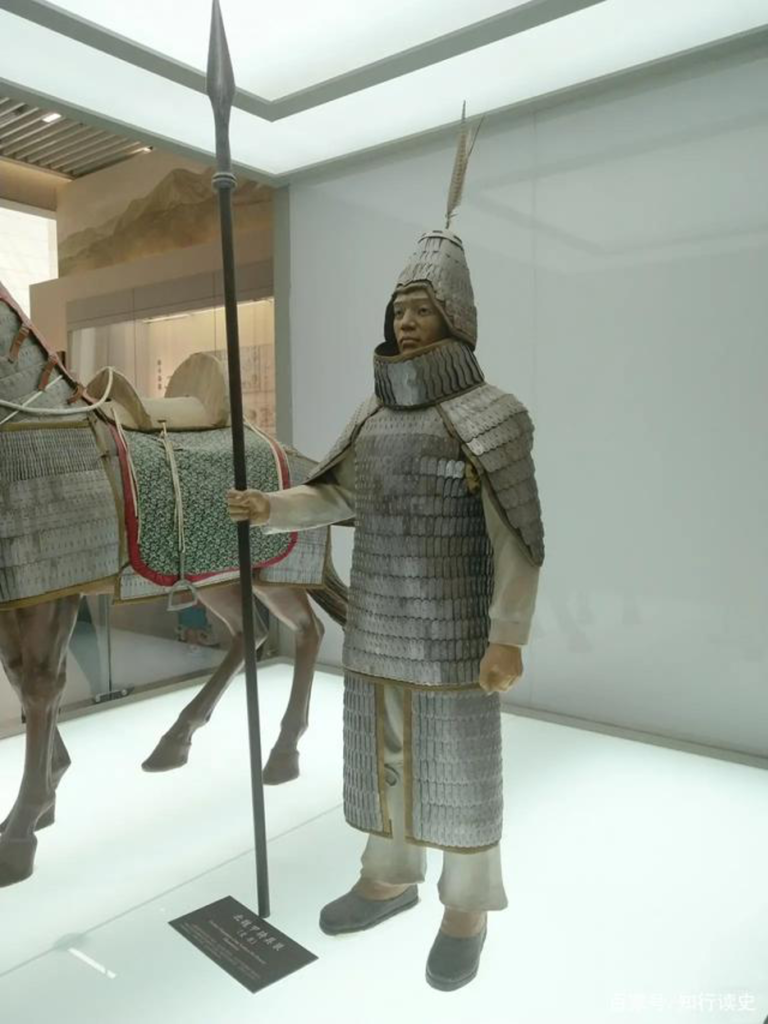
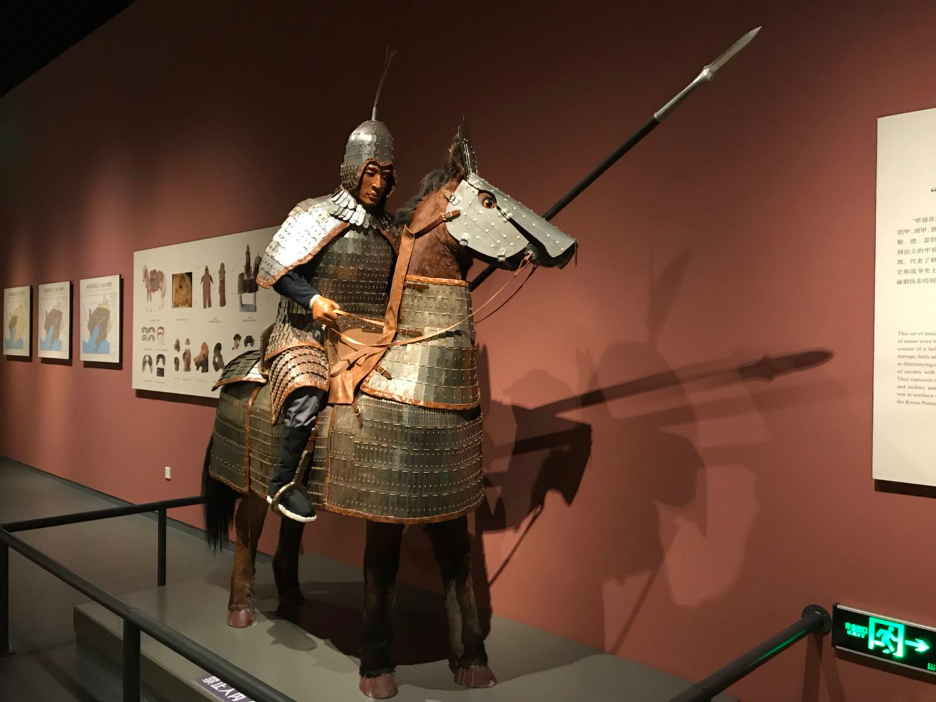
(Above image) A replica model of the Northern Wei armored cavalry on display at the Military Museum of the Chinese People’s Revolution
Chain mail armor is constructed by interlinking small metal rings, with each ring typically connecting to four others, creating a layered chain-like structure. This type of armor has two main characteristics: First, its high density makes it extremely durable; second, it offers excellent flexibility, similar to the impenetrable “soft hedgehog armor” described in martial arts novels. It can be worn like clothing and concealed under outer garments.
Chain mail clearly originated from the West and was the predominant armor during the medieval period. It is believed to have been introduced to China during the late Han to Wei-Jin period, primarily used by northern regime armies. The Book of Jin (Jin Shu) describes chain mail armor as follows: “The Hu people were skilled with bows and horses, and proficient with spears. Their armor was like connected chains, impenetrable to arrows. Using leather ropes, they could strike people while riding, and many were successful. The masses greatly feared them.”
The most direct path for chain mail’s introduction to China was through warfare. Fu Jian, the ruler of Former Qin, sent his general Lü Guang to conquer the Western Regions, achieving a great victory. During battles with Western Region armies, Lü Guang captured numerous spoils of war, including chain mail armor. Subsequently, the Central Plains region gradually mastered the technology to manufacture chain mail, allowing this new form of armor to take root and flourish in China.
However, chain mail was not the mainstream armor at the time, being primarily equipped only in Xinjiang, Tibet, and other regions. Nevertheless, its longevity proved far greater than that of the lamellar armor (lian-dang) and cavalry armor (jia-qi ju-zhuang). While the latter two declined toward extinction during the Tang Dynasty, chain mail was still listed in the Tang Liu Dian (Six Codes of the Tang Dynasty), and military officers could still be seen wearing chain mail armor even during the Qing Dynasty.
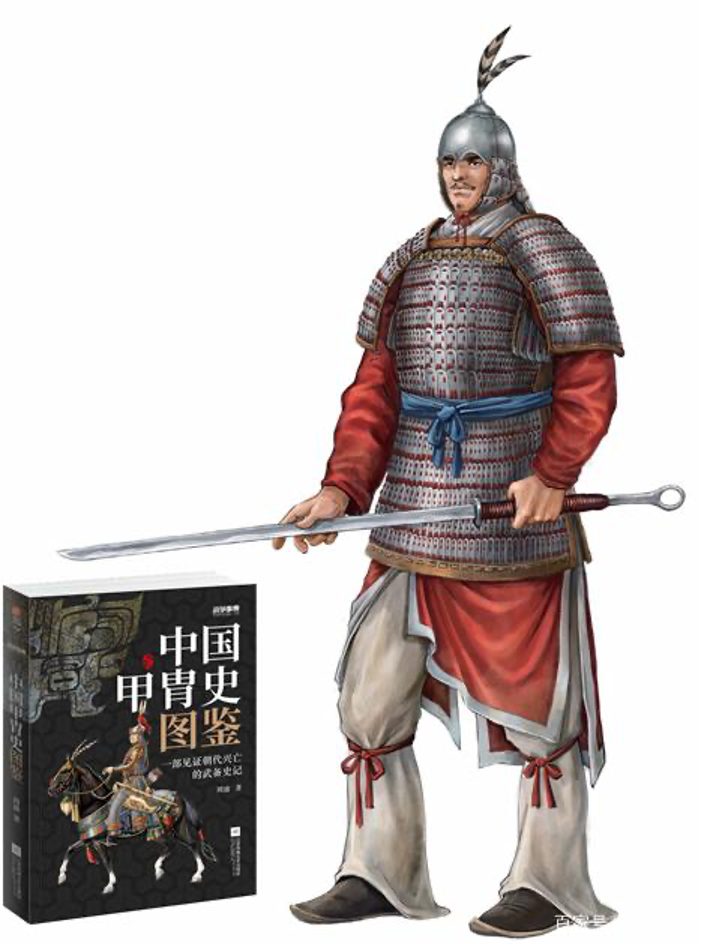
(Above image) An illustration of a Northern Qi Dynasty iron scale armor warrior from the Northern and Southern Dynasties period, based on iron armor styles unearthed from the southern city of Ye in Hebei Province (Illustrated by Liu Shiwei)
During the Wei, Jin, and Northern and Southern Dynasties period, two new armor-making techniques emerged: “xiao-lian” (pin-joining) and “mao-he” (riveting).
“Xiao-lian” uses pins as standard components for positioning, determining the location of different parts. The previously mentioned horse armor components were primarily assembled using this pin-joining method. While this was the basic manufacturing technique for European armor, it was rarely used in traditional Chinese scale armor. It wasn’t until this method was introduced to China during the Wei, Jin, and Northern and Southern Dynasties period that Chinese armorers began adopting it.
“Mao-he” refers to the technique of joining pieces together using rivets, a method that was primarily used in helmet manufacturing during this period.
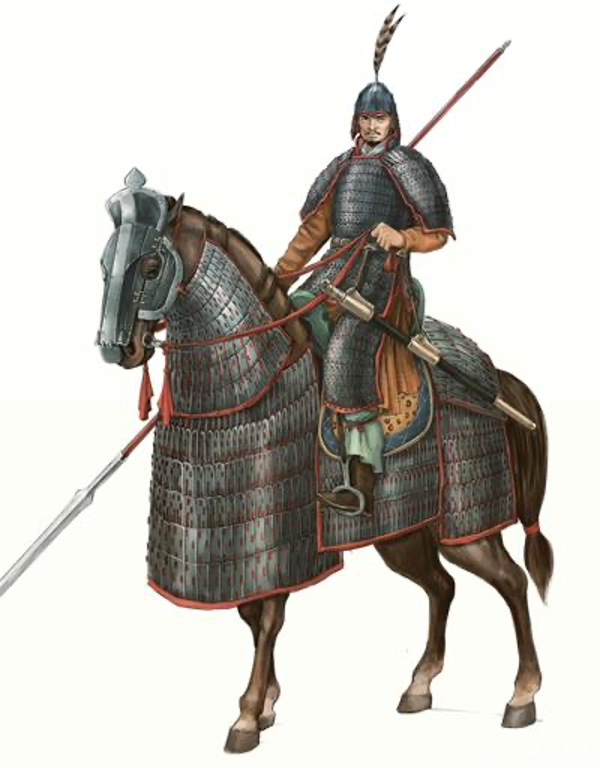
(Above image) Northern Zhou iron scale armor, illustrated based on armor styles unearthed from the Sixteen Kingdoms period tomb at Lamalong, Beipiao, Liaoning Province (Illustrated by Liu Shiwei)
During the Northern and Southern Dynasties period, the mainstream helmet (dou-mou) and headgear (zhou) designs remained similar to those of the Three Kingdoms and Two Jin periods, primarily consisting of these types:
- Hemispherical helmet tops with attached armor plates (dou). Some versions had plates hanging down from both sides of the helmet, while others covered the entire face, leaving only the eyes, nose, and mouth exposed.
- Helmets without tops (dou-mou), similar in design to the iron helmets unearthed from the King of Qi’s tomb from the Han Dynasty. However, these had much larger neck guards than the Qi King’s helmet, with an adjustable back section that could presumably be modified to fit different head sizes.
- Common iron helmets, examples of which have been unearthed in Hohhot. These were cast from raw iron as a single piece, with a short tube at the top, likely for inserting decorative features such as feathers.
- Helmet cover armor (dou-mou zhao jia), which strictly speaking wasn’t a helmet but rather armor mounted on top of the helmet.
While no actual helmets or dou-mou made using the riveting technique from the Northern and Southern Dynasties period have been unearthed, this manufacturing method would later flourish during the Tang Dynasty.
The Wei, Jin, and Northern and Southern Dynasties period was marked by continuous warfare and instability. Various regimes, in their struggle for survival or dominance, were forced into repeated military competitions. This objectively stimulated military development, leading to innovations in military equipment, including armor. This truly was a pivotal era in Chinese armor development, bridging the past and future.