Learn More about Chinese fashion
The Dragon Robes and Shifting Power in the Ming and Qing Dynasties
Ironically, the dragons that adorned the robes of the ruling classes during the Qing dynasty had previously been part of a concerted effort by Ming rulers to establish a uniquely Chinese garment style. As Schuyler Cammann explains, “At the founding of the Ming Dynasty, toward the end of the fourteenth century, the ultra-conservative and nationalistic Chinese court did everything possible to get away from the foreign influences that had been imported by the Mongol rulers of the previous dynasty, Khublai Khan and his descendants” (Cammann, 1949, p. 190). The results of this cultural efforts included Chinese cuts with long, flowing sleeves that struck a stark contrast against the traditionally tighter-fitting Yüan Mongol robes (Cammann, 1949, pp. 190–191). In addition, these robes prominently featured dragons as one of their most common motifs.
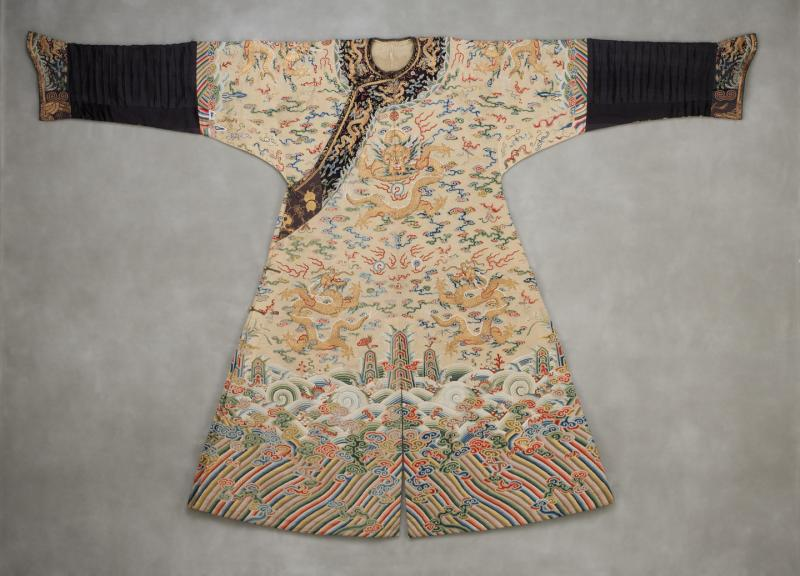
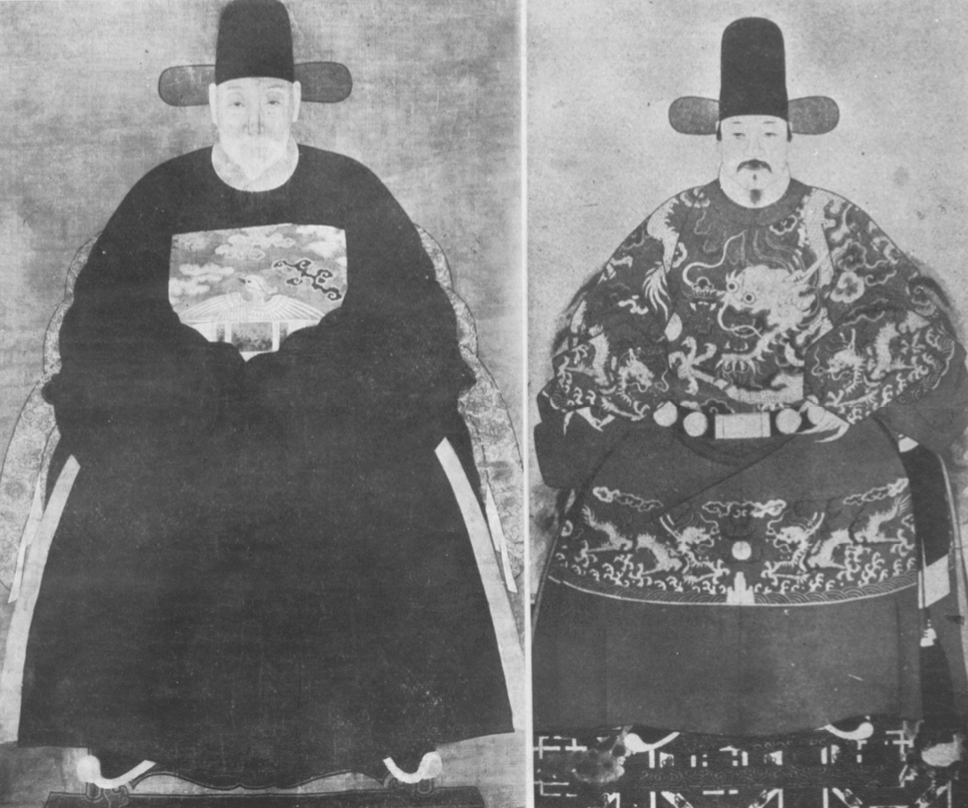
Ironically, the dragons that adorned the robes of the ruling classes during the Qing dynasty had previously been part of a concerted effort by Ming rulers to establish a uniquely Chinese garment style. As Schuyler Cammann explains, “At the founding of the Ming Dynasty, toward the end of the fourteenth century, the ultra-conservative and nationalistic Chinese court did everything possible to get away from the foreign influences that had been imported by the Mongol rulers of the previous dynasty, Khublai Khan and his descendants” (Cammann, 1949, p. 190). The results of this cultural efforts included Chinese cuts with long, flowing sleeves that struck a stark contrast against the traditionally tighter-fitting Yüan Mongol robes (Cammann, 1949, pp. 190–191). In addition, these robes prominently featured dragons as one of their most common motifs.