Hanfu (汉服), meaning “Han clothing,” is a traditional Chinese attire with a rich and complex history spanning over 3,000 years. Known for its elegant lines and unique aesthetic, Hanfu reflects the essence of Chinese culture, blending style with symbolism. This article explores the evolution of Hanfu, its cultural significance, and how it has influenced fashion within and beyond China.
Origins of Hanfu
Hanfu’s origins date back to the earliest Chinese dynasties, particularly the Shang (1600–1046 BCE) and Zhou (1046–256 BCE) Dynasties. It was during these periods that the earliest forms of Han-style clothing were developed, characterized by simple yet functional designs. The ancient garments were typically made from silk, a luxurious material that China was famous for producing. Traditional Hanfu often included long robes with wide sleeves, a cross-collar, and a tied sash at the waist instead of buttons or zippers.
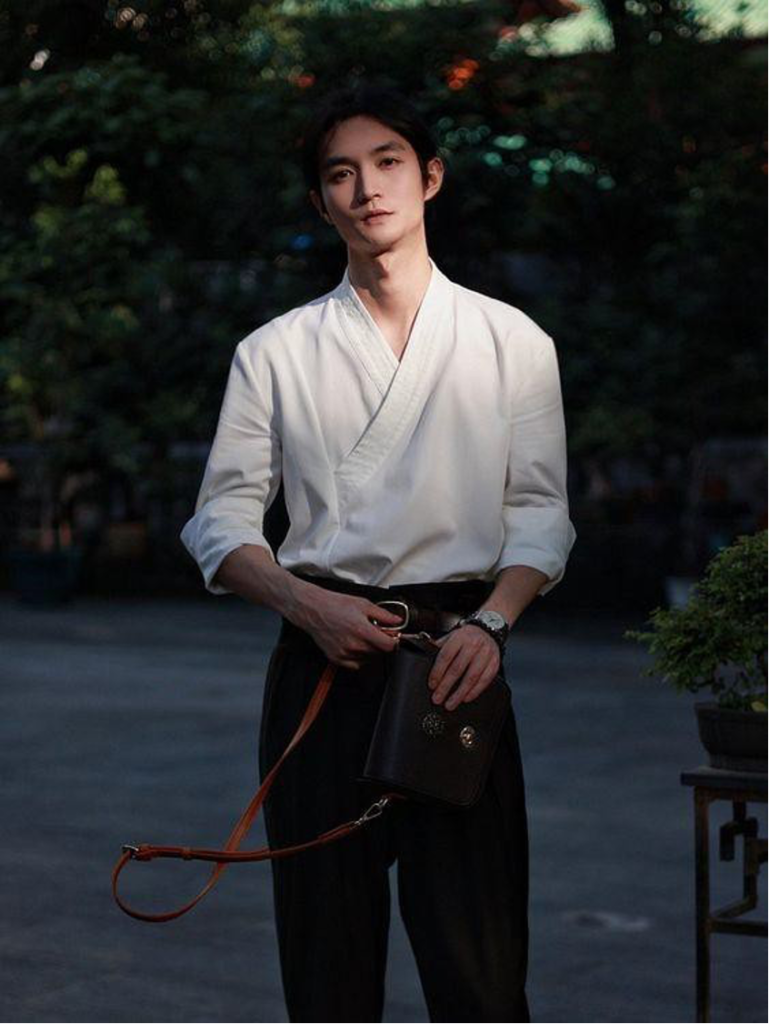
Image: Traditional Hanfu with cross-collar design. Source: Pinterest
The Influence of Confucianism on Hanfu Design
During the Zhou Dynasty, Confucian philosophy began to shape Chinese society profoundly, and its emphasis on social order and propriety became evident in Hanfu. The garment’s design became more structured to reflect the wearer’s social status. For instance, the length and color of Hanfu, as well as the number of layers worn, indicated a person’s rank.
Embroidered patterns, such as dragons or phoenixes, were also reserved for the royal family, while other motifs represented various virtues like wisdom, strength, and loyalty.
Evolution through Dynasties
Hanfu continued to evolve over the centuries, adapting to the styles and tastes of each dynasty:
- Han Dynasty (206 BCE–220 CE): This era saw the popularization of long, flowing robes with wide belts. Women’s attire became more elaborate, with skirts reaching the floor and outer garments adorned with intricate patterns.
- Tang Dynasty (618–907 CE): Often considered the golden age of Chinese culture, the Tang period introduced more colorful Hanfu with diverse silhouettes influenced by interactions with neighboring cultures like Persia. Women wore form-fitting garments, and high-waisted skirts became fashionable.
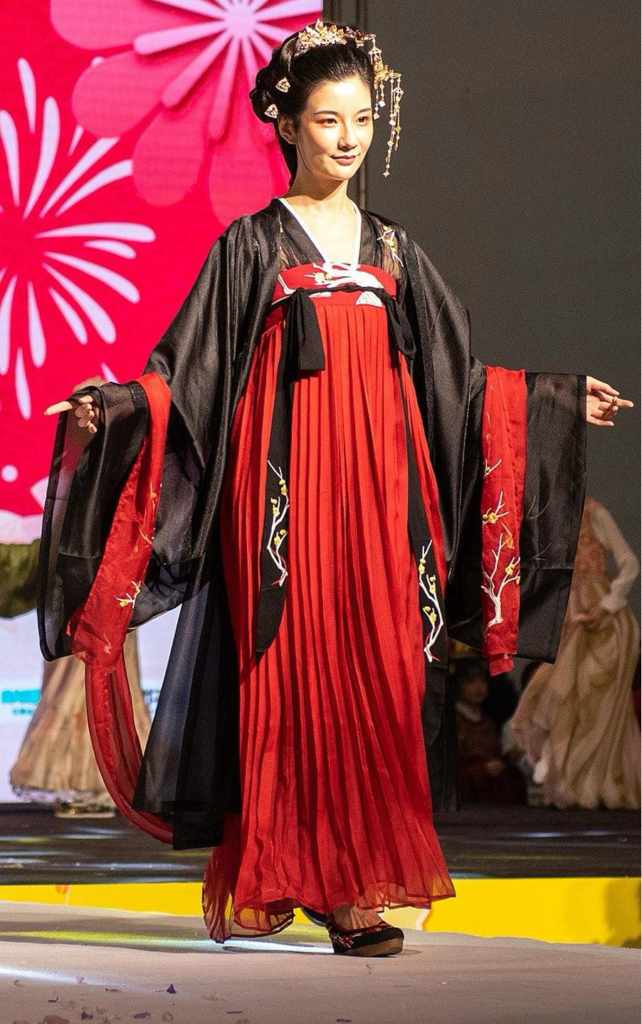
Image: High-waisted Hanfu style from the Tang Dynasty. Source: Wikipedia
- Ming Dynasty (1368–1644 CE): Hanfu styles from this era are considered the most iconic. Hanfu designs became highly elaborate, with layers of robes and intricate embroidery. The Ming government promoted Hanfu as a symbol of national pride, especially after the Mongol-led Yuan Dynasty, which had imposed foreign clothing styles.
However, after the Ming Dynasty, the rise of the Qing Dynasty (1644–1912) led to a decline in traditional Hanfu. The Manchu rulers enforced their own style of clothing, the “qipao” or “cheongsam,” which differed from Hanfu’s flowing silhouette and became the dominant style across China.
Hanfu Revival in Modern China
In recent years, Hanfu has experienced a resurgence, particularly among younger generations interested in traditional Chinese culture. The Hanfu Movement began in the early 21st century, as Chinese citizens sought to reconnect with their cultural heritage. Today, Hanfu is worn at cultural festivals, weddings, and even as everyday attire by some enthusiasts, symbolizing a revival of pride in Chinese history and identity.
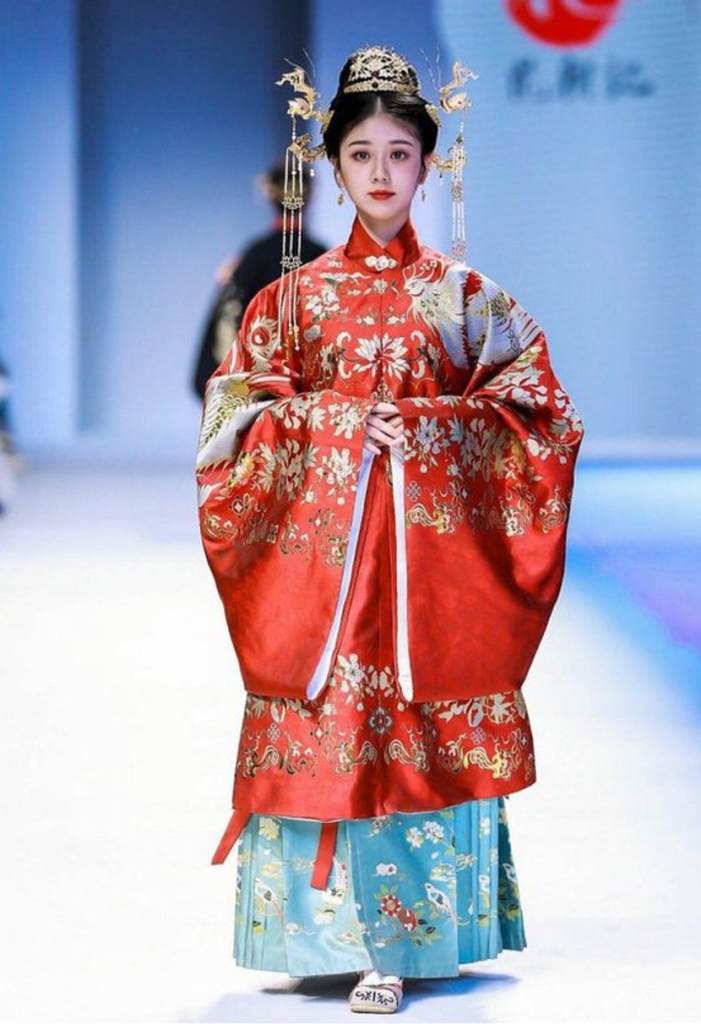
Image: Modern Hanfu worn at a cultural festival. Source: HanfuSupplier
How Hanfu Influences Modern Fashion
The timeless design of Hanfu has influenced global fashion, with elements such as loose silhouettes, wide sleeves, and delicate embroidery appearing in contemporary collections.
Luxury brands often draw inspiration from Hanfu’s aesthetic, adapting traditional patterns and motifs to appeal to a modern audience.
Conclusion
Hanfu stands as a testament to China’s long and storied history, reflecting the aesthetics, values, and craftsmanship of each era. Its recent revival signifies a growing appreciation for traditional Chinese culture and an enduring legacy that continues to inspire.
Citations
- Xu, K. (2015). History of Chinese Clothing: A Cultural Perspective. Beijing: China International Press.
- Wang, Y. (2017). Chinese Dress: History, Art, and Fashion. Shanghai: Modern East Publishing.
- Li, Z. (2019). “The Revival of Hanfu Culture in Modern China.” Journal of Chinese Cultural Studies, 14(3), 211–225.