The Tang Dynasty (618–907 CE) is reckoned as the most colorful and brilliant period in Chinese history in literature, art, and dressing. Wu & Zhang (2023) asserts that Tang dynasty formal wedding costumes reveal the civilization and international characteristics of Tang dynasty society. The two kinds of dress are completely different to indicate the high status of both bride and groom.
Bride garment
The first garment for brides was the xiuqun, a long dress with a high waist, worn predominantly from expensive, red silk. Red represented prosperity and joy ideal for a wedding. The xiuqun had long and loose sleeves, as well as several thin layers of lighter under-bottoms worn by the bride which made her look like she was swaying while walking. This garment was often decorated by gold and silver threads (Zhang et al, 2020). Beautifully woven motifs such as phoenixes or flowers with subdued meanings were used. For instance, the phoenix symbolized grace, beauty as well as harmony, which the bride associated with a happy marriage.
Chinese bride in xiuqun Wu & Zhang (2023)
Impressively complementing her outfit, the bride had on the fengguan (鳳冠), or the phoenix crown. This luxurious headpiece was made out of gold and could be ornamented with gems, pearls and filigree metalwork, with hanging beads and minute carved kingfisher feather insets. Yet the fengguan was not only an aesthetic feature but it also reflects the bride’s improvement in social class (Wang et al, 2020). It highlighted her as the Shakira that is at the center of the festivities and her new station in life as a wife.
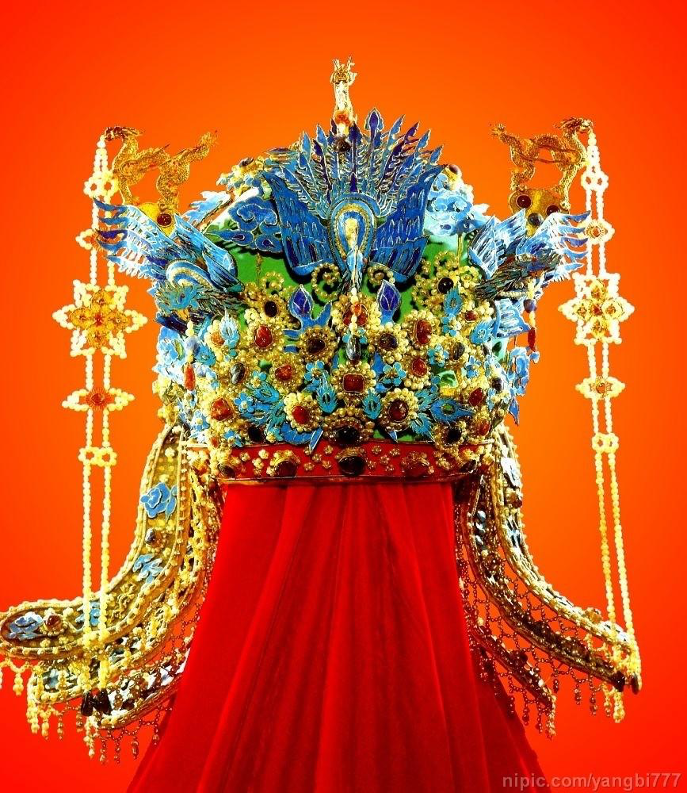
The phoenix crown (Wei et al, 2023)
The Groom Garment
The groom also wore clothing which was in accordance to his social class. He most commonly dressed in a formal style hanfu (汉服) that would ordinarily be in the formal blue or black, both of which are symbols of dignity and stability (Song et al, 2023). The former attire was the hanfu, which included wide-sleeved outer garments of different tones of colors, often made of silk that was, in turn, worn over a pure silk garment, tied at the lower part of the belly with a jade belt that evidently represented richness. His cloth was often decorated with fine embellishments of which dragon like patterns dominated dressed and since this symbolized strength, power and aristocracy, Wu was an epitome of this.
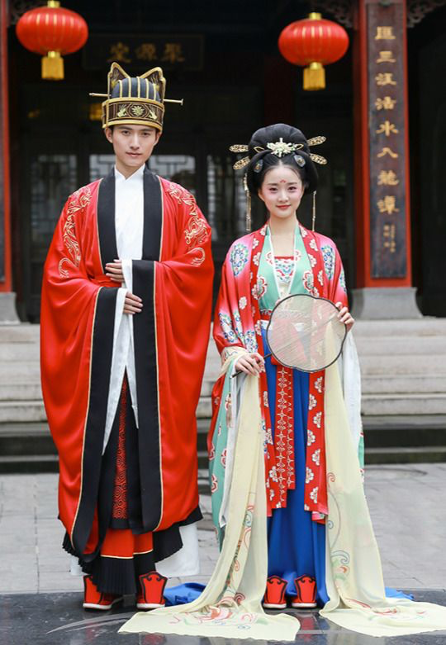
The bride and groom in Hanfu (Song et al, 2023)
The headwear of the groom was the black silk cap worn on the head with decorative parts which signified the groom’s rank; and may have gold or jade fittings. This headwear bare essential status since they amid the Tang Dynasty that sought to uphold the existence of the upper classes of society.
The elements of the men’s and women’s wedding clothing were somewhat similar: for example, they wore fine silk and extensive sleeves, which had functional and significance of excellent attributes. In the Tang period, silk was a valuable material, which meant precisely luxury and refinement (Wei et al, 2023). The flowy nature of the dress is portrayed by the wide sleeves which symbolized elegance and thus women whose dress was adorned with such sleeves moved gracefully especially during ceremonials.
Tang Suit (Wu & Zhang, 2023)
Moreover, the extensive employment of gold thread for ornament in the garment with the augment of jade that held great importance as it signified richness and noble birth. Thick and intensive hues implemented to their attire not only symbolized happiness and festivity of the local tradition but also revealed their desire for the productive and peaceful life in the future as one family.
Not only did the Tang Dynastic people have their wedding clothing as just clothes they wore, it was a cultural work of art. The patterns and motifs of them where rich with symbolism and signified the beliefs and hope of the people and where one of the most significant stages in their lives.
References
Song, C., Zhao, H., Men, A., & Liang, X. (2023). Design Expression of “Chinese-style” Costumes in the Context of Globalization. Fibres & Textiles in Eastern Europe, 31(2), 82-91.
Wu, Y., & Zhang, K. (2023). From the Silk Road to the World: Historical Changes and Influence of Guangdong Embroidery’s Export Embroideries. Przestrzeń Społeczna (Social Space), 23(4), 303-330.
Wei, Y., Gu, W., Zhong, L., Liu, B., Huang, F., Chang, Y., … & Chen, G. (2023). Investigation of Asian Dyes and Pigments from the Artifact of “Murongzhi” and the Silk Road in China. ACS omega, 8(2), 2508-2519.
Wang, X., Colbert, F., & Legoux, R. (2020). From niche interest to fashion trend. International Journal of Arts Management, 23(1), 79-89.
Zhang, F., & KROTOVA, T. (2024). The influence of Silk Road culture on modern design: artistic features of Chinese brocade patterns. Art and Design, (1), 56-67.