The History of Mulan’s Weapons
The story of Mulan is a short narrative of the most famous Chinese woman warrior. The story is set in the first millennium and revolves around the life experiences of a girl who took her father’s place and joined the military. Mulan was worried about her father’s welfare if he joined the army because of his old age. Since Mulan’s family had no older male who could serve in the army, she offered to take her father’s place and traveled to the army camp (Yang, 2018). Despite feeling lonely at the army camp, Mulan focused on achieving her mission and ambitions as a female warrior. She served in the military for ten years and was exposed to various parts of China during battle. She fought in more than a hundred battles and was promoted progressively due to the death of army leaders who died in battle. According to Ding (2024), Mulan portrayed a good performance during her military service and was well recognized and rewarded after the long and bloody campaign. When the emperor asked Mulan for a reward that she wanted, she declined any official post and requested to be allowed to return home.
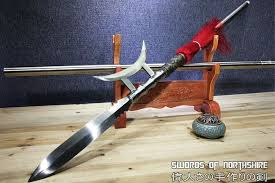
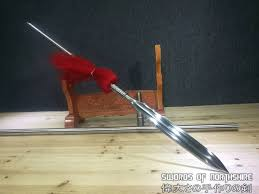
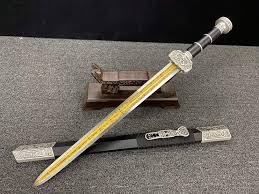
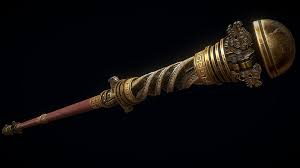
The story of Mulan highlights historical Chinese weapons that were used in battle. The five main Chinese weapons included dao, jian, spear, staff, and halberd. Mulan mostly used dao swords because the weapon was easy to use, was available in plenty, and was a reliable poem.
The weapons used during historical battles portray the diversity between historical and ancient weapons (Lan, 2003). Martial Arts studies analyze the weapons of Mulan beginning with the military armor. Mulan wore military armor to resemble a man when she was enlisting in the army. The military armor was handmade using leather and was decorated with many intricate metal fixtures. Military armor is among the historical weapons used during the ancient Chinese dynasties and is no longer used by the modern military. The armor was critical because it protected the warriors from body cuts during war (Hedges, 2007). The leather was significant in preventing scratches from daggers, swords, spears, and arrows. The armor also included a well-crafted headgear made from leather and metal. The military armor was a fundamental aspect of the Chinese military because it also contained pockets and spaces for carrying ancient Chinese weapons (Gray, 1999). The military armor was significant because it distinguished military personnel from other society members who were not in the army. In the modern world, the ancient military armor has been replaced by unique military uniforms including caps and military boots.
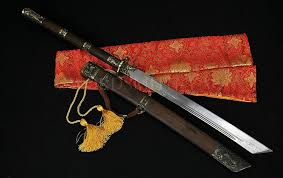
The Chinese dao was the most preferred weapon used by Mulan during battle. The Dao is also among the few remaining artifacts that craftsmen still create in the modern world. However, the dao is no longer used in modern battles, but they provide history students a glimpse into China’s deep past. Additionally, the materials used in making the dao in the modern world are different from the traditional metals which were quality metals and were professionally made by craftsmen. The dao blades contained textual information that was determined by the individual who used the blade. The textual references on these blades contain rich Chinese history including the realm of lineages within various Chinese dynasties (Dong, 2006). These weapons have been preserved and sold at very expensive prices because they contain the history of China during the period between 100 BCE to 100 CE. Chinese underwent various foundational things during Mulan’s period. For example, the Chinese economy faced challenges because of the frequent conflicts and wars. The swords also portray that during Mulan’s era, a new religion known as Daoism emerged and developed to be a popular religion. The swords also had symbols that represented the Shaolin temple which was built at the end of the 5th century. The Shaolin temple is a significant aspect of Chinese history because it functioned as the center for the translation and dissemination of foreign religious concepts.
The history of Mulan’s weapons is critical because it portrays significant aspects of ancient Chinese history. Armor and weapons played a critical part in maintaining the Chinese dynasties. The Dragon-Sparrow Dao is an example of a dao that portrays the nature of the Chinese people. During this period, people started being receptive to new ideas and practices. The Chinese territory was controlled by horse-riding warriors from the North (Yun, 2009). The Dragon-Sparrow dao that Mulan used was surprisingly light and narrow in profile. However, the spine had a thick cross section that allowed the blade to deliver strong slashes while riding on horseback. The blades had small angular tips that easily penetrated weak armor. Analyzing Mulan’s weapons allows students to appreciate various aspects of Chinese history including the political, religious, and cultural heritage. Mulan’s story is relevant in the modern world because it sensitizes gender equality concerns. Gender equality encourages equal allocation of resources and opportunities among males and females to achieve balanced economic growth and development.
References
- Ding, F. (2024). Stories from the perspective of Eastern cultural complex: taking Mulan as an example. Trans/Form/Ação, 47(2), e02400181.
- Dong, L. (2006). Cross-cultural palimpsest of Mulan: Iconography of the woman warrior from premodern China to Asian America. University of Massachusetts Amherst.
- Gao, X., & Sun, M. (2022). A Study on the Cultural Misreading of Film Mulan. Forest Chemicals Review, 1526-1538.
- Gray, J. G. (1999). The Warriors: Reflections on men in battle. U of Nebraska Press.
- Hedges, C. (2007). What every person should know about war. Simon and Schuster.
- Lan, F. (2003). The female individual and the empire: A historicist approach to Mulan and Kingston’s Woman Warrior. Comparative Literature, 55(3), 229-245.
- Yang, Q. (2018). Mulan in China and America: From premodern to modern. Comparative Literature: East & West, 2(1), 45-59.
- Yun, Z. (2009). The Complete Taiji Dao: The Art of the Chinese Saber. Blue Snake Books.