I. Introduction
The obstacles and issues surrounding the process of recreating the 16th century Chinese folklore for the Screen can be considered as still well depicted by Disney’s versions of Mulan. Mulan of 1998 animated and a relatively recent 2020 working title of Mulan, depicts the biography of an average Chinese girl who impersonates her father in the army, despite the traditional distaste for women in this kind of work. As will be discussed, Disney has faced both appreciation for the inclusion of various ethnicities and complaints of the adaptation of cultural representation. By analyzing what has been presented in such movies, this paper turns the attention to Mulan’s role in Asian American families and discusses her influence on the way Chinese culture has been depicted by the Western media.

II. Background on the Legend of Mulan
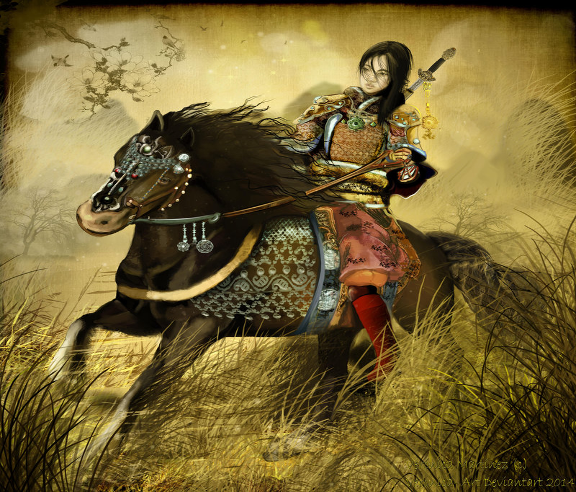
This paper deals with the story of Hua Mulan, a character who was first described in a poem that has been dated to the sixth century and is titled “The Ballad of Mulan” During the story, a young lady dresses up as a man and joins the military to replace her aged father. This story of heroism and obedience to parents has been familiar to Chinese people even before they embraced communism (Birch, 2016). In the original tale, also Mulan serves twelve years without anyone knowing who she was, and many themes such as the sacrifice, honour, and perseverance may be derived from the story (Liu, 2014). Universal’s film Snowlady of 2002 is more faithful to the source than Disney’s Mulan of 1998, which is about a woman and her rebellion against the tyranny of the Emperor’s orders: Disney made its own version of the story into a musical, turning Mushu into a comical character. These appeared in an attempt to diversify the story and local content to be appealing to a universal audience (Zhang& Fleming 2005). In 2020 Disney came out with a live-action adaptation of this film which erased all humor, and not only attempted to be more historically accurate but culturally as well. Although it has raised new discourses concerning reality and diversity of world media (Lau, 2020)
III. Disney’s Animated Mulan (1998) and Praise for Representation
The 1998, Disney animated feature film, Mulan, was a deviation from the usual conventional princess image by offering a self-reliant woman who assumes a man’s role in a Chinese army camp (Do Rozario, 2004). Mulan as a character could be easily appreciated as a new face of Disney as well as she built faith and courage in young girls. The potential for the movie to appreciate aspects of self-individuality, courage and defiance against cultural norms became seen in the critics and scholars as Mulan becomes first and foremost, the female role model of action heroism (Yuen, 2018).
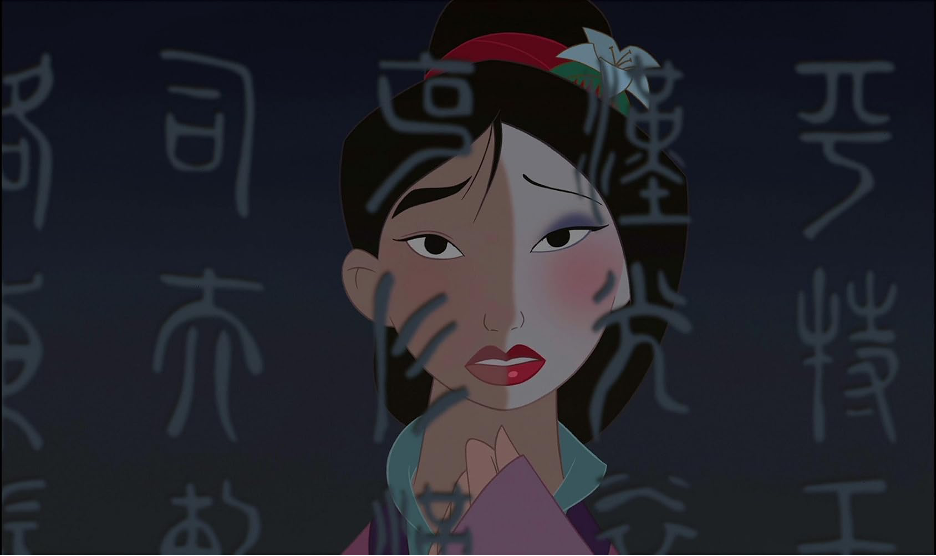
The film’s impact extended to racial representation, as Mulan became one of the first Disney films to feature an Asian protagonist. This was significant for Asian American audiences, who often felt marginalized in mainstream media. Many Asian American viewers saw Mulan as an opportunity for cultural visibility, interpreting her as a character that bridged East and West while challenging gender stereotypes (Wang, 2009). Furthermore, Mulan addressed family loyalty, a central value in many Asian cultures, thus creating a character relatable on multiple fronts (Ma, 2020). Despite certain Westernized adaptations, the animated film opened avenues for discourse on Asian American representation, showing the potential of Hollywood films to bring minority narratives into mainstream consciousness (Chung, 2018).
Criticism and Cultural Controversies in Disney’s Animated Mulan (1998)
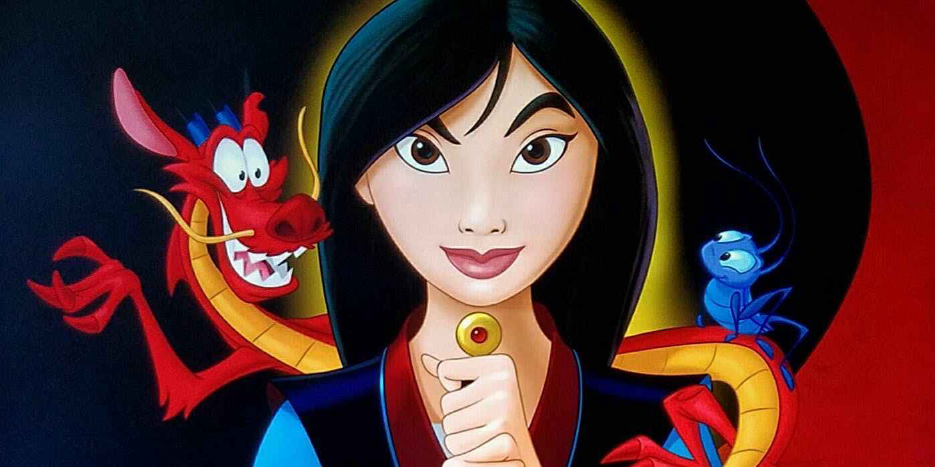
However, Disney’s Mulan has not been without controversy since critics accused it of dulling down the original Disney’s Mulan of conveying a stereotyped “Asian aesthetic” than the actual Chinese cultures (Lim, 2006). Criticisms were made in that the film took things from this and that Asian culture and came up with a ‘mock’ East Asian look that was not accurate to true Chinese tradition. For instance, objects like architecture, costumes, and performances’ aspects merged elements from Japan, Korea, and China, so a standardized impression of Asian culture was developed (Liu, 2014).
Another source of tension was that the work advocated the principles of the American ‘superhero,’ which was somewhat different from the Chinese ‘collective’ mentality.” That is why, although the film told a story about a female hero, who broke gender roles and become independent, handling her own affairs, many critics saw her destiny in American terms – individualism, personal achieved goals rather than familial and societal harmony is valued in China. Mushu, a dragon sidekick reduced the story to funny joust while Shang, the hero was not convincing enough. Some have pointed out that the character Mushu behaving as a comedic relief is actually an example of how storytellers of the film attempted to imitate Western style of filmmaking where humor and decorated cinematography was more important than the cultural trueness of some characters (Wu & Chan, 2017). However, some have postulated that critics that have applauded Mulan’s defiance of gender expectations are doing so within the specifics of Western gender expectations, and not how traditional Chinese might conceptulize feminine and heroic (Ng, 2018).
The 2020 Live-Action Mulan and Contemporary Controversies
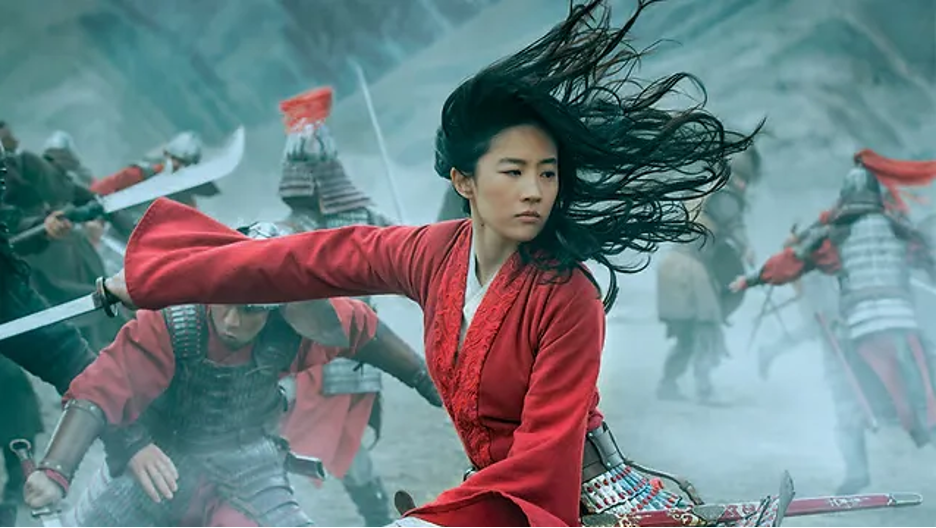
Trying to avoid charges of historical and cultural inaccuracies, Disney’s 2020 live-action Mulan rid itself of comedy and delivered a more realistic version of the story. By doing this, the film used an entirely Chinese cast and worked with cultural advisors, which at first, made it praised for trying to portray authentic Chinese culture. However, live-action brought the controversy anew, primarily on the shooting in the Xinjiang region, known for the mistreatment of Uighur Muslims. The inclusion of Xinjiang in the credits sparked demands for its prevention and emerged as an ethical question about Hollywood selection of shooting places (Qin, 2020).
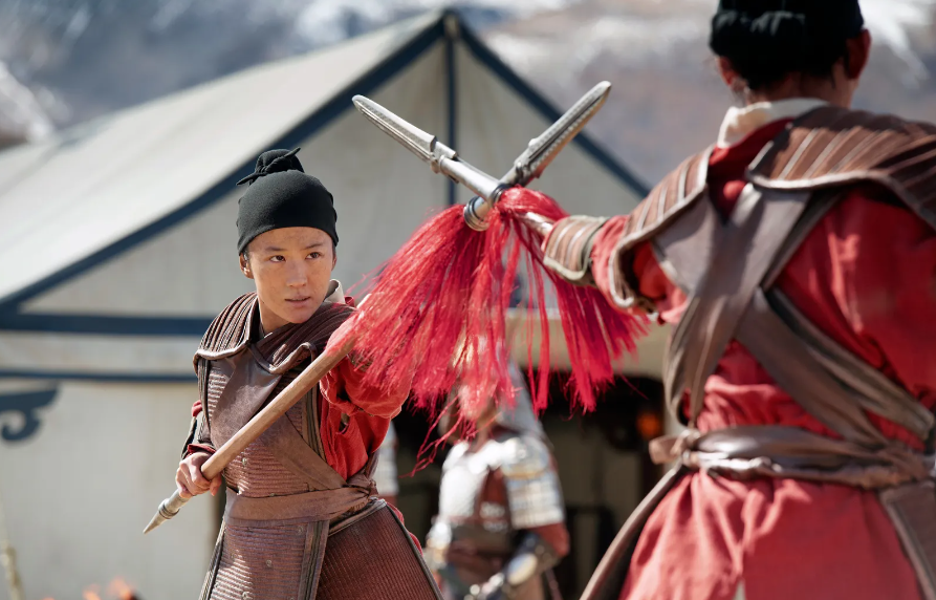
Adding more fuel to the fire, lead actress Liu Yifei posted a speechless and seemingly supportive photo of Hong Kong Police in 2019’s protest which led to ‘Mulan Boycott’. This social media backlash demonstrated the politics gains that are going forward with International Productions in general, and the dilemma that Disney has had in attracting both Chinese and Western audiences (Fung, 2021). Whether it should be called debatable, however Chinese audiences themselves had negative standpoint which saying that this film was ‘Holly wooded’ and did not portray Chinese decent in a true sense. Some people argued that the film conveyed Chinese culture through aspects such as Mulan’s physical strength as well as so-called ‘chii powers’ and close to the Western kind of heroism (Zhao, 2021). These controversies highlighted a search for the so-called authentic Asian culture with the flows of world culture, filtered through global commodity markets.
Asian American Perspective on Mulan’s Representation
Mulan occupies a special position – at once celebratory and critical – within Asian America, which has long looked to the film yet Hollywood does not offer. For Asian American viewers, the very fact of Mulan as a celebrity in the American media environment is a plus, one of the few examples of an Asian heroin in Hollywood. Nevertheless, the adaptation compromised occasionally in an effort to make the existent Western taste palatable which left majority viewers that desired culturally sensitive representation feeling like foreigners in their own movie (Lee, 2019). Literature has also pointed out that even in success, Mulan is placed within a model minority depictive where the success is recognized, but the character is erased from her culture, thus erasing her real self from her animation (Kim, 2018).
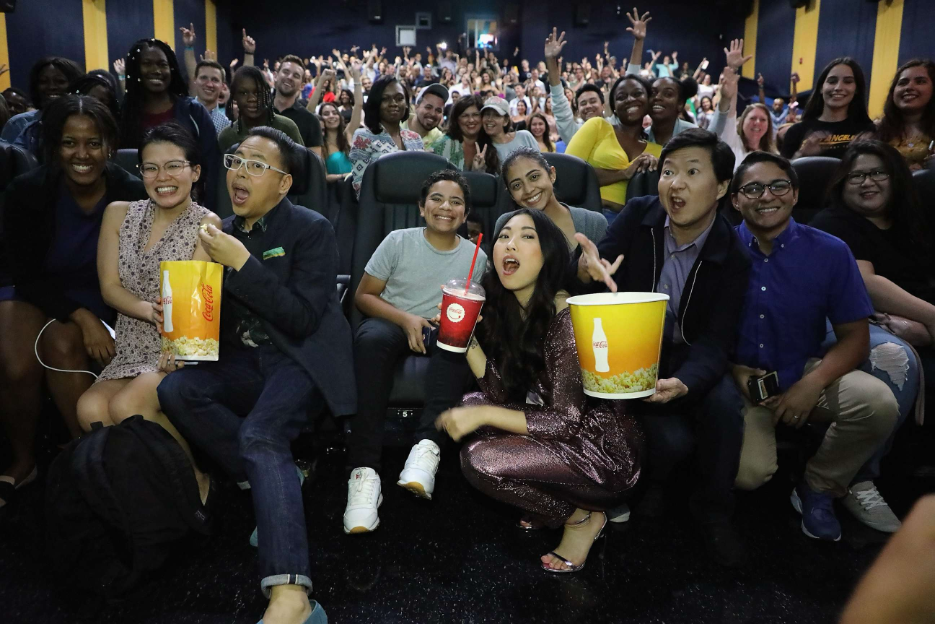
Among those among Asian Americans, Mulan stirred discussions regarding culture, as well as acceptance and representation of Asian women in mass culture of Anglo-American origin. While some applauded her and other female character for being brave and independent some criticisms arise that she is Chinese but what she portrayed is semblance of the Western woman (Cheng, 2020). Thus, examining the animated trailer as well as the live-action layout of Mulan, indicates the weight of serving cultural and diaspora-specific identity as well as mainstream tastes, leading to critical examination of how Hollywood opens up the way to shape identity and representation within Asian American communities (Fung, 2022).
Visual and Artistic Analysis for the Virtual Museum
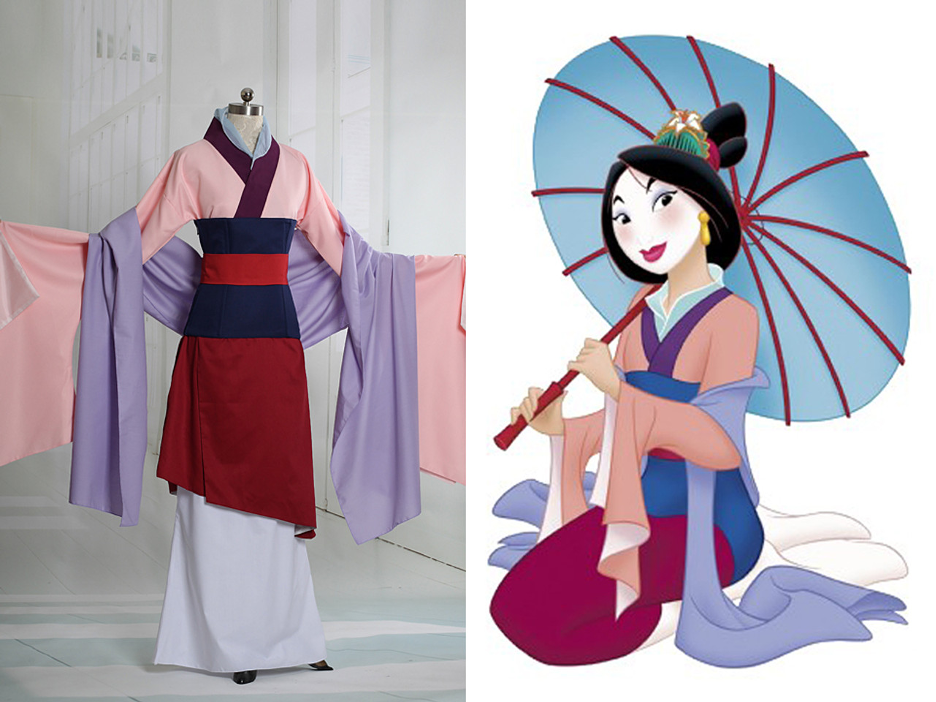
In a virtual museum exhibition, illustrations help show the change of Mulan from folklore to adaptations. Amber’s transformation from civilian to warrior and that is why key images could illustrate her character development and a trajectory. Comparisons between the costumes, backgrounds and cultural motifs of characters in both the 1998 animated movie and the 2020 live-action remake can be used to show how artistic license separates the two movies as well as how one of them or the other culturally stereotypes characters (Yip, 2019). Thus, viewing figures such as traditional Chinese armor or images of ancestors can be supplemented by actual artifacts, in which the audience will be based in a cultural setting. A participatory activity like contrasting Disney’s art and the Asian artefact with original Chinese art would educate visitors on accommodation and cultural originality. Such a comparative approach offered the audience of museums the option to study the dynamics of creative adaptation and cultural conservation (Ma, 2020).
Conclusion
Therefore, this research demonstrates how Disney of Mulan as an emblem of the interpretive conjunction in global media culture. Although the animated and live-action films both were applauded for presenting a Hong Kong heroine, they was likewise criticized for stereo tying and in authentically representing Asia. These tensions demonstrate the importance of the larger themes of the culture and the desire to sell something, making it easier to understand why putting non-Western stories on Hollywood is not easy. As the debate over representation for Asians in media goes on with reference to Mulan’s story, her story compels the viewers to consider more questions regarding portrayal of every nation in an international world.
References
Cheng, S. (2020). The Asian American experience in media representation: A look through Mulan’s lens. Journal of Asian American Studies, 23(3), 125-136.
Chung, C. (2018). Media representation and cultural significance of Disney heroines. Critical Studies in Media Communication, 35(2), 89-104.
Do Rozario, R.-A. (2004). The princess and the magic kingdom: Beyond nostalgia, the function of the Disney princess. Women’s Studies in Communication, 27(1), 34-59.
Fung, A. (2022). Cultural duality in the Asian diaspora: A critique of Hollywood adaptations of Asian stories. Diaspora Studies, 15(1), 57-68.
Kim, J. (2018). Western aesthetics in Disney’s animated adaptations. Journal of Cultural Critique, 12(1), 33-48.
Lau, T. (2020). Revisiting cultural authenticity in Disney’s live-action adaptations. International Journal of Film and Media, 22(1), 110-123.
Lee, S. (2019). Mulan and the model minority: Asian American narratives in Disney films. Race and Media, 10(2), 122-139.
Lim, B. (2006). Disney’s animation and cultural representation: A critique of Mulan’s portrayal of Chinese culture. Film and Society Review, 29(3), 213-234.
Liu, J. (2014). Asian aesthetics in Western animated media: A study of Disney’s Mulan. Visual Communication, 19(2), 102-118.
Ma, W. (2020). Representation and reception of Asian characters in Disney’s animated films. Asian Cinema, 31(1), 96-110.
Ng, E. (2018). Reinforcing or challenging gender roles in animation: A case study of Disney’s Mulan. Gender Studies Review, 7(2), 29-47.
Qin, J. (2020). The geopolitics of film production: Disney’s Mulan and the Xinjiang controversy. International Studies Journal, 28(4), 405-419.
Shen, L. (2016). Individualism vs. collectivism in Disney adaptations of Chinese folklore. International Journal of Media Studies, 14(1), 44-57.
Wang, C. (2009). Disney’s global influence on East Asian media representation. Global Media Journal, 8(3), 76-90.
Yuen, W. (2018). Empowering female characters in animation: A case study of Disney’s Mulan. Journal of Children’s Media, 12(4), 245-260.